Published by Willow Flooring

When it comes to choosing the right flooring for your kitchen or bathroom, no material outperforms tile. Homeowners, interior designers, and contractors consistently turn to ceramic and porcelain tile for two of the most demanding rooms in any home — and for good reason.
Tile delivers a combination of water resistance, hygiene, durability, and design flexibility that no other flooring material can match. Whether you are renovating a primary bathroom, updating a guest restroom, or replacing worn-out kitchen floors, understanding why tile flooring stands apart will help you make a smarter, longer-lasting investment.
This guide covers everything you need to know — from the science behind tile’s moisture protection to the practical differences between ceramic and porcelain — so you can choose the right tile for your specific space.
1. Tile Is the Industry Standard for Moisture Protection
Water is the number one enemy of most flooring materials. Laminate buckles, hardwood warps, and carpet develop mold. Tile does none of these things — and the science explains why.
How Tile Resists Water Damage
Porcelain tile has a water absorption rate of less than 0.5%, making it virtually impervious to moisture. This is not a marketing claim — it is a measurable, tested standard set by the American National Standards Institute (ANSI). Standard ceramic tile also performs well, typically absorbing less than 3% water by weight.
This density matters enormously in kitchens and bathrooms where spills, splashes, steam, and standing water are daily realities. Unlike laminate or engineered wood, tile will not swell, warp, or delaminate when repeatedly exposed to water over the years of use.
Why This Matters Beneath the Surface
Moisture that penetrates flooring does not just damage the surface material — it works its way into the subfloor. Once the subfloor is compromised, you are looking at expensive structural repairs far beyond a simple floor replacement. Tile’s barrier properties protect not just the tile itself, but everything underneath it.
Glazed tiles add a second line of defense. The glaze creates a sealed, glass-like coating over the tile body that prevents liquids from seeping in even during prolonged exposure — think of the standing water around a bathroom sink or in front of a kitchen sink.
Mold and Mildew Prevention
One of the most overlooked benefits of tile is its role in preventing mold and mildew growth. Because the surface is non-porous, moisture cannot soak in and create the damp, organic environment that mold requires. This is critical for indoor air quality, particularly in bathrooms where ventilation is limited.
For grout lines — which are the only truly porous element in a tiled surface — modern antimicrobial and epoxy grout options effectively eliminate the one remaining vulnerability.

2. Tile Is the Most Hygienic Flooring You Can Install
In rooms where you prepare food and manage personal hygiene, the cleanliness of your floor matters more than in any other area of your home. Tile is the only common flooring material that is genuinely non-porous at the surface level.
Why Non-Porous Surfaces Stay Cleaner
Carpet, wood, and even some vinyl products have microscopic surface textures that trap bacteria, germs, food particles, and allergens. You can vacuum and mop, but you cannot fully extract what is embedded in the material itself.
Tile has no such hiding places. Bacteria, grease, food residue, and odor-causing compounds sit on the surface where they can be wiped away completely with standard household cleaners. No special products, no deep-cleaning systems — just routine maintenance.
A Safer Choice for Allergy and Asthma Sufferers
Tile is a hypoallergenic flooring choice because it does not harbor dust mites, pet dander, or pollen. For households with allergy sufferers or asthma patients, replacing carpet or other porous flooring with tile in the kitchen and bathrooms can lead to measurable improvements in indoor air quality.
Additionally, ceramic and porcelain tile produce low or zero VOC (Volatile Organic Compound) emissions. Some synthetic flooring products off-gas chemicals during and after installation; tile does not. What you install is what stays — a chemically stable, inert surface.
Easy Disinfection When It Counts
During illness, when handling raw meat, or simply during deep-cleaning sessions, tile floors can be disinfected with bleach-based or hospital-grade cleaners without any risk of damaging the surface. This level of sanitization is not possible on wood, laminate, or carpet without causing irreversible damage to the material.
3. Tile Lasts Longer Than Any Other Flooring Option
Tile is one of the few flooring materials that can genuinely outlast the home it is installed in. When properly installed and maintained, ceramic and porcelain tile floors routinely last 50 years or more — and well-preserved tile has been found in structures thousands of years old.
The Manufacturing Process Creates Exceptional Hardness
Ceramic and porcelain tiles are fired in kilns at temperatures reaching up to 2,500°F. This process transforms raw clay and minerals into an extremely dense, hard material that is resistant to scratches, dents, and impacts. The Mohs hardness scale, used to measure scratch resistance, rates porcelain tile at approximately 7 out of 10 — harder than most metals.
In practical terms, this means tile will not scratch from dragged chairs, will not dent from dropped cast iron cookware, and will not wear thin under heavy foot traffic. Vinyl and laminate, by contrast, show visible wear within 5 to 10 years in high-traffic kitchen zones.
Fire Resistance Is a Kitchen-Specific Advantage
Tile is non-combustible. It will not burn, melt, or emit toxic fumes if exposed to high heat near a stove or oven. For kitchen floors specifically, this is a meaningful safety and insurance consideration that synthetic alternatives simply cannot offer.
Individual Tile Replacement Keeps Costs Low
Perhaps the most underappreciated durability advantage of tile is its repairability. If a single tile chips or cracks — which is rare — only that tile needs to be replaced. With hardwood, damage often requires refinishing or replacing a large section of the floor. With vinyl or laminate, matching replacement pieces become unavailable over time, forcing a full-floor replacement.
Keeping a few extra tiles from your original installation is all the insurance you need to maintain a perfect-looking floor indefinitely.
4. Tile Offers Unmatched Design Versatility
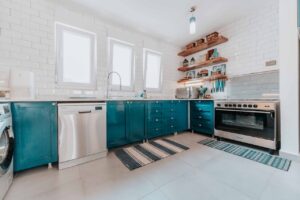
Tile is one of the most design-flexible materials in residential construction. The range of sizes, shapes, finishes, colors, and patterns available today is broader than at any point in history — and modern manufacturing technology has made premium aesthetic looks accessible at every price point.
Patterns and Layouts That Transform a Space
The same basic square tile can be installed in dozens of ways: straight-set, staggered, diagonal, herringbone, chevron, or basketweave. Larger format tiles installed in a simple grid pattern create a clean, contemporary look. Hexagonal or penny-round mosaics bring a traditional or artisanal quality to a bathroom floor.
Design versatility is especially valuable in bathrooms, where running the same tile from the floor up the walls — or directly into the shower — creates a cohesive “wet room” aesthetic that elevates the entire space.
Realistic Natural Material Looks
Modern inkjet printing technology allows ceramic and porcelain manufacturers to create tiles that authentically replicate the appearance of marble, slate, limestone, travertine, and rustic wood grain — with none of those materials’ maintenance requirements. You can achieve the look of a white Carrara marble bathroom floor at a fraction of the cost, with zero risk of staining or etching.
Size Options That Control How a Room Feels
Small tiles make a space feel busy and textured. Large-format tiles — 24×24 inches or larger — create fewer grout lines, a cleaner visual field, and the illusion of a larger room. This is particularly valuable in small bathrooms, where the right tile size can make a compact space feel open and airy.
5. Tile Is Easier to Maintain Than Most People Expect
One of the common misconceptions about tile is that grout makes it difficult to keep clean. Modern tile and grout products have largely eliminated that concern.
Routine Maintenance Is Minimal
Day-to-day care for tile floors requires only sweeping or vacuuming to remove dry debris, followed by damp mopping with a mild, pH-neutral cleaner. There is no need to sand, refinish, wax, or seal the tile surface itself. Compare this to hardwood, which requires periodic refinishing, or natural stone, which requires annual or semi-annual sealing.
Advances in Grout Technology
Traditional cement grout required annual sealing and was prone to staining and discoloration. Today’s epoxy grouts and high-performance pre-mixed grouts are stain-resistant, non-porous, and require no sealing. Choosing the right grout at installation effectively eliminates the maintenance challenge that gave older tile floors a bad reputation.
Large-format tiles further reduce grout maintenance by minimizing the total number of grout joints in a floor — fewer lines means less surface area to clean and fewer opportunities for staining.
Stains Do Not Stick
Glazed tile surfaces resist staining from red wine, coffee, cooking oil, sauces, and most household chemicals. Spills that would permanently stain grout or penetrate wood can be wiped off glazed tile completely — often with nothing more than a damp cloth.
6. Tile Provides Important Safety and Comfort Features
Slip Resistance in Wet Environments
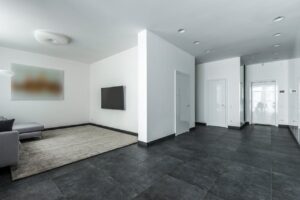
A common concern about tile is that it becomes slippery when wet. This is true of highly polished tile on shower floors or near bathtubs — but it is easily avoided by selecting the right finish for the right application.
Matte and textured tile finishes provide meaningful slip resistance measured by the Coefficient of Friction (C.O.F.). The higher the C.O.F. rating, the more grip the tile provides. For shower floors and bathroom wet zones, tiles with a C.O.F. of 0.60 or higher are recommended. Mosaic tiles — small tiles with frequent grout lines — are often used specifically on shower floors because the grout itself provides additional traction for bare feet.
Compatibility with Radiant Floor Heating
Tile’s thermal conductivity — the property that makes it feel cold underfoot — is actually its greatest comfort advantage when paired with in-floor radiant heating. Tile conducts heat efficiently and evenly, warming the entire floor surface from below. Once heated, it retains warmth well.
A heated tile floor in a bathroom eliminates the “cold floor” problem and is one of the most-requested luxury features in bathroom remodels. No other common flooring material conducts radiant heat as effectively as tile.
Temperature Regulation in Warm Climates
In warm climates — particularly relevant for homeowners in the southern United States — tile’s natural thermal mass helps keep interior spaces cooler. The material absorbs heat slowly and stays cool to the touch, reducing reliance on air conditioning and contributing to a more comfortable home environment.
7. Tile Increases Property Value and Return on Investment
Tile is not just a flooring material — it is a home improvement investment. According to real estate professionals and appraisers, updated tile in kitchens and bathrooms consistently ranks among the top improvements that increase resale value.
Prospective homebuyers interpret tile floors as a signal of quality, durability, and low ongoing maintenance. A tiled kitchen or bathroom communicates that the space has been finished to a higher standard than one with laminate or vinyl — even when the price difference at installation is relatively modest.
Because tile is a permanent installation that does not degrade with age the way softer flooring materials do, it retains its value over the long lifecycle of the home. The cost-per-year-of-use calculation almost always favors tile over any alternative once you account for replacement frequency.
8. Ceramic vs. Porcelain: Which Tile Should You Choose?
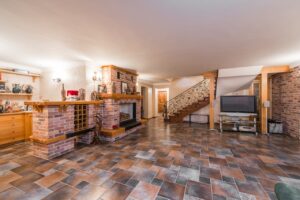
Both ceramic and porcelain tile are excellent choices for kitchens and bathrooms, but they are not identical. Understanding the differences helps you match the right product to each application.
Porcelain Tile
Porcelain is a type of ceramic tile made from a finer, denser clay body fired at higher temperatures. The result is a tile that is harder, less porous, and more resistant to water, chips, and heavy impact than standard ceramic.
- Water absorption rate under 0.5% — ideal for shower floors, wet areas, and high-humidity bathrooms
- Through-body color in unglazed versions means chips are nearly invisible
- Suitable for outdoor use due to freeze-thaw resistance
- Recommended for kitchen floors with heavy foot traffic and appliance use
Ceramic Tile
Standard ceramic tile is made from a broader range of clay materials and fired at lower temperatures than porcelain. It is slightly more porous but easier to cut, typically less expensive, and available in a wider range of vibrant colors and surface glazes.
- Easier to cut and shape — preferred for wall tile, backsplashes, and decorative applications
- Wider variety of colors and artistic glazes
- Excellent for bathroom walls, shower surrounds, and kitchen backsplashes
- More budget-friendly for large surface areas
The short answer: use porcelain for floors, especially in wet areas. Use ceramic for walls, backsplashes, and design-focused applications where cutting flexibility and color variety are priorities.
9. Common Questions About Tile in Kitchens and Bathrooms
Is tile too cold for a bathroom floor?
Tile feels cold because it conducts heat away from your feet efficiently. This can be fully addressed by installing an electric or hydronic radiant heating mat beneath the tile — a relatively low-cost addition during a renovation that transforms the experience of using the bathroom in winter.
Is tile slippery when wet?
Only if you choose the wrong finish. Polished or high-gloss tile should be reserved for walls. For bathroom floors and shower bases, select tile rated with a C.O.F. of 0.60 or higher, or choose textured or matte-finish tile specifically designed for wet environments.
Is grout hard to keep clean?
It can be with older cement grout products. Modern epoxy grout is non-porous, stain-resistant, and requires no sealing. Specifying epoxy grout at installation eliminates most grout maintenance concerns permanently.
How long does tile flooring last?
A properly installed tile floor with quality materials can last 50 years or more. The tile itself rarely fails — when tile floors need replacing, it is usually because of subfloor movement, improper installation, or the homeowner wanting an updated look, not because the tile wore out.
What is the best tile for a kitchen floor?
Porcelain tile rated for floor use, with a matte or satin finish and a C.O.F. of at least 0.50, is the standard recommendation for kitchen floors. Large-format tiles (18×18 or 24×24 inches) minimize grout lines and are easiest to keep clean in a cooking environment.
Final Thoughts: The Smartest Flooring Investment You Can Make
Tile earns its place as the dominant flooring choice for kitchens and bathrooms because it genuinely excels at every measure that matters in those rooms: moisture resistance, hygiene, durability, design, ease of maintenance, and long-term value.
No other flooring material offers the same combination of practical performance and aesthetic flexibility. Whether you choose classic subway tile, large-format wood-look porcelain, or a handcrafted mosaic pattern, you are making an investment that will hold its value, protect your home, and look beautiful for decades.
At Willow Flooring, we carry a curated selection of ceramic and porcelain tile across every price point, finish, and format. Our team can help you select the right tile for your specific kitchen or bathroom project and connect you with expert installation.
Explore our tile collections at willow-flooring.com or visit us in-store to see samples in person.
