Seeing a paint splatter on your gorgeous hardwood floor is enough to make you panic. But don’t panic. If you take the right steps, you can strip that paint without damaging the finish.
The trick is to be patient and layer the most gentle method first. This guide will teach you how to identify your paint and floor type, then select the safest and most effective removal method
First Things First: The 3-Minute Self-Assessment
Stop before you hit the floor, pause, and count to five. It’s a simple step, but it is the most crucial of them all and one that will keep you from making an expensive faux pas.
Step 1: Determine What Type of Paint You Have
Latex or Oil-Based Paint?
This is what will determine which solvent to use. Here’s an easy test:
- Dab a piece of cloth with rubbing alcohol on an inconspicuous area of the paint.
- If it softens or transfers to the cloth, it’s latex.
- If none occurs, it’s almost certainly oil-based.
Step 2: Identify Your Floor Finish
Think of your floor’s finish as its shield. Today’s floors are finished with tough polyurethane. Older homes, of course, might have more delicate finishes like shellac or wax. Even finer finishes need special care and are more susceptible to wear from chemicals and water.
Step 3: Gather Your Tools
Everything being ready makes the work go more easily. Here is what you will need for most methods:
- Plastic putty knife or scraper (never metal)
- Clean, soft rags
- Mild dish soap and water
- Safety gloves and goggles
- Good ventilation
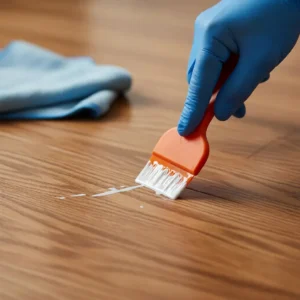
Method 1: The Light Touch (For New Paint & Splatters)
If the paint is new or has a few small drips, begin here. This is the safest option for stripping paint without damaging your floor’s finish.
If the Paint Is Fresh, Latex-Based: Use Soapy Water
This is the easiest fix for a new spill.
- Add a few drops of mild dish soap to warm water.
- Dip a soft cloth into the liquid. Wring it out well so that it’s not sopping wet.
- Drape the cloth over the paint and allow it to soften for a minute or two.
- Gently wipe the paint away. You might need to use a plastic scraper to get under the edge of the drop.
The Plastic Scraper Technique
For drips that have already begun to dry, reach for a plastic scraper (so you don’t gouge the wood).
- Rest the blade of a plastic putty knife at a very shallow angle against the floor.
- Carefully wedge the edge of the scraper beneath the paint.
- The point is to lift the paint, not scrape it. It should peel away in a small piece or flake.
Pro Tip: If you have stubborn latex drips, you can soften the paint with a hairdryer set on low; then it scrapes off more easily.
Method 2: With Solvents (For Dried & Stubborn Paint)
If the gentle tactics don’t do the job, it’s time for a solvent. The latter you’ll pick based on your paint test.
For Latex Paint: Rubbing Alcohol
Isopropyl alcohol is superb for dissolving cured latex paint and can be used on polyurethane finishes with no ill effects.
- Put on gloves. Use the rubbing alcohol directly on the paint spot.
- Allow it to sit for a minute or two until the paint loosens.
- Wipe the area with a cloth or rag. The paint will slowly start to peel.
- Scrape away any residual traces with a plastic scraper.
- Once dry, use a damp cloth and soapy water to clean the spot where you applied alcohol (to remove any remaining smell of alcohol).
For Oil-Based Paint: Mineral Spirits
In addition, oil-based paint needs a harsher solvent to be removed. Mineral spirits are the traditional product to use.
- Ensure the room is well ventilated. Open windows and use a fan. Wear safety gloves and goggles.
- Dampen a clean rag with some mineral spirits.
- Gently rub the paint spot. You will see the paint come loose and stick onto the rag.
- Gently scrape softened paint off with a plastic scraping tool.
- After the paint is removed, wash the area with a mild soapy solution in order to remove any oily residue. Dry the spot completely.
Commercial Paint Strippers
If you have a layer of paint that is very thick, then the use of a commercial stripper may be required. If using for DIY purposes, opt for a citrus-based stripper. They are far less poisonous and safer for indoor application. Follow the product’s instructions exactly.
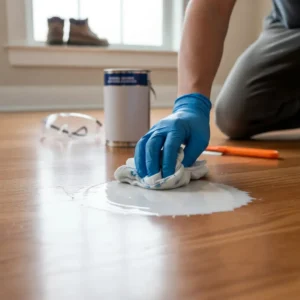
Method 3: If All Else Fails (Sanding)
Warning: This technique will take off your floor finish with the paint. It should only be used for long sections and when the paint has penetrated all the way down into its grain. This is a significant repair, and you will need to refinish the floor afterward.
- Sand with 220-grit, which is a fine sanding block or sandpaper.
- Lightly sand with the grain of the wood.
- You only want to take off the top layer of finish and paint. Be gentle when you sand don’t bear down too hard on the paper.
- Once you have sanded, you will also need to clean the whole floor and put on a fresh layer of polyurethane in order to bring back its hue and shield the wood.
The Finishing Touch: Clean Up and Refinish
When the paint is removed, your work isn’t quite done.
Step 4
- Wash the floor with a wood floor cleaner to ensure all chemicals are gone.
- If the finish is dulled by your solvents or scraping, you may need to renew the shine. You may want to put on a light coat of paste wax and buff it off.
- In some cases, you may have to re-coat the finished boards with a fresh coat of liquid polyurethane for more severe damage.
When to Call a Professional
Occasionally, a DIY solution is not the best solution. You need to call an experienced flooring contractor if:
- You have a huge painted surface.
- You suspect the paint could contain lead (typical in homes built before 1978).
- Your floors are a beautiful, old-world style that you are fearful of ruining.
- The methods above are not for you, or you don’t feel comfortable with them.
With some care and working from the least to the most aggressive treatment, you can gradually strip away paint and uncover your hardwood floors’ natural beauty.